
Most people who want to get healthier already know what they should do. The difficulty is doing it on a Tuesday evening after a full day at a desk, with no energy and a to-do list still open. Walking is the easiest exercise to begin, and it still gets abandoned, usually because the plan was too ambitious from the first day.
This guide covers how to start a walking habit when your schedule is full and your motivation is unreliable. The method is simple: begin with a walk so short it seems hardly worth doing, attach it to something you already do every day, plan for the days you miss, and add time slowly.
Why walking is the habit most likely to stick
A habit survives when it costs little to do, so most of the case for walking is practical. You need no equipment beyond shoes you can already walk in. You need no gym membership, no booking, no class time to arrive on, and no skill to learn. You can do it in work clothes, in most weather, and in nearly any neighborhood or building.
Walking is also gentle enough that it rarely leaves you sore. Harder exercise often demands recovery days, and a missed recovery day easily turns into a missed week. A moderate walk can be repeated daily without that problem, which makes a daily habit realistic.
For desk workers there is an extra reason. Many health organizations advise breaking up long periods of sitting with light movement, and a short walk does that directly. It also pairs easily with other things: a phone call, a podcast, a conversation with a colleague, or simply a few minutes without a screen.
Public health bodies such as the World Health Organization and the US Centers for Disease Control and Prevention suggest adults aim for roughly 150 minutes of moderate activity per week, and brisk walking counts toward that. Treat it as a distant destination. A beginner who opens with 30 minutes a day, every day, has set a target that the first busy week will break. The rest of this article is about reaching it, or something near it, without relying on willpower.
Start smaller than feels worthwhile: the 5 minute rule
The rule is this: walk for five minutes a day. That is the whole commitment. If you feel like walking longer you may, but five minutes counts as a complete success.
The size looks almost silly, and that is deliberate. For most people who have stalled, the obstacle is starting. Finding shoes, deciding where to go, and dreading the effort of a long walk all pile up before you leave the house. A five-minute walk removes most of that dread. On the worst day, tired and distracted, you can still do five minutes.
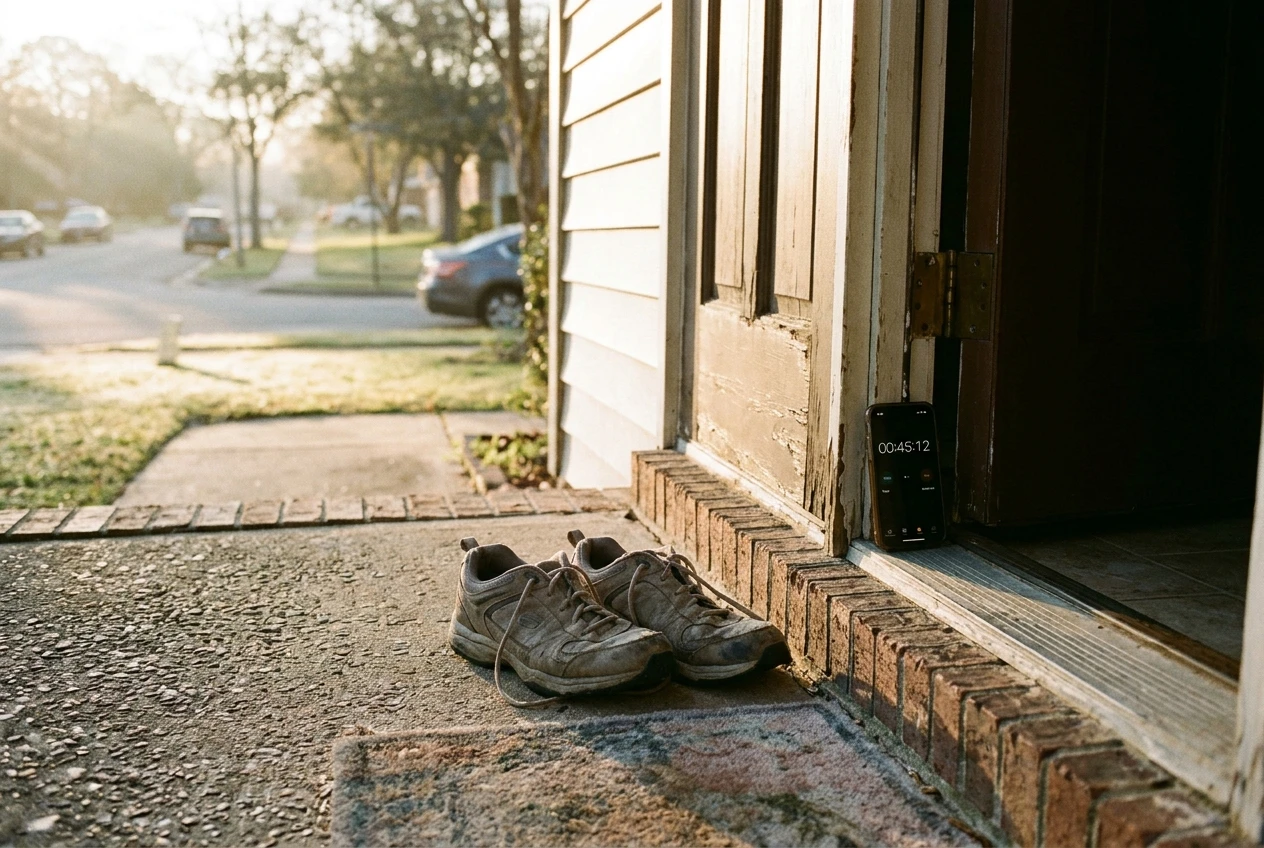
Motivation rises and falls with sleep, stress, weather, and mood. A habit that only happens when you feel motivated will happen irregularly. A habit that needs very little motivation will happen on most days, and a repeated small action is what builds the routine. In the first weeks, repetition matters more than distance.
How to run the 5 minute rule
A few details make it easier to follow:
- Decide the route ahead of time. Walk out for two and a half minutes, then turn around. You never have to think about where to go, and you always end up back home.
- Use a timer, not a distance. Set your phone to five minutes. When it rings, you are done and can stop without guilt.
- Treat the first step as the commitment. On a reluctant day, tell yourself you only have to put your shoes on and step outside. Most of the time, once you are outside, you will finish the five minutes.
- Hold the minimum for two weeks. If you walk longer on a good day, enjoy it, but keep tomorrow’s commitment at five minutes. Raising the bar after every good day is how people end up back at a goal they cannot sustain.
- Skip step counts and fitness tracking for now. A tracker adds a pass or fail judgment to a habit that is still fragile. You can bring it in later, once the walk is automatic.
The aim of these first two weeks is not fitness. It is to make walking something you simply do each day, so that adding time later builds on a routine that already exists.
Pin your walk to something you already do every day
A walk with no fixed place in your day depends on remembering and deciding, and both fail under pressure. The fix is to tie the walk to something you already do reliably. This is often called habit stacking: you use an existing routine as the signal for the new one.
Write it as a single sentence in this form: After I [existing habit], I will walk for five minutes. The existing habit gives you the trigger, so you stop needing to find a moment.
Choosing a good anchor
Some everyday events work as anchors and some do not. A good anchor happens every day, has a clear end point, and happens somewhere you can walk out the door soon afterward. Examples:
- After you pour your first coffee or tea of the day
- After you close your laptop at the end of work
- After you finish lunch
- After you get home and take off your coat, before sitting down
- After you wash the dinner dishes
- After you park the car or step off the train or bus
Poor anchors are vague or variable: “when I have a free moment,” “sometime in the afternoon,” or “after my meetings,” when your meetings end at different times. If you cannot name the exact event that comes just before your walk, choose a different one.
Make the cue visible
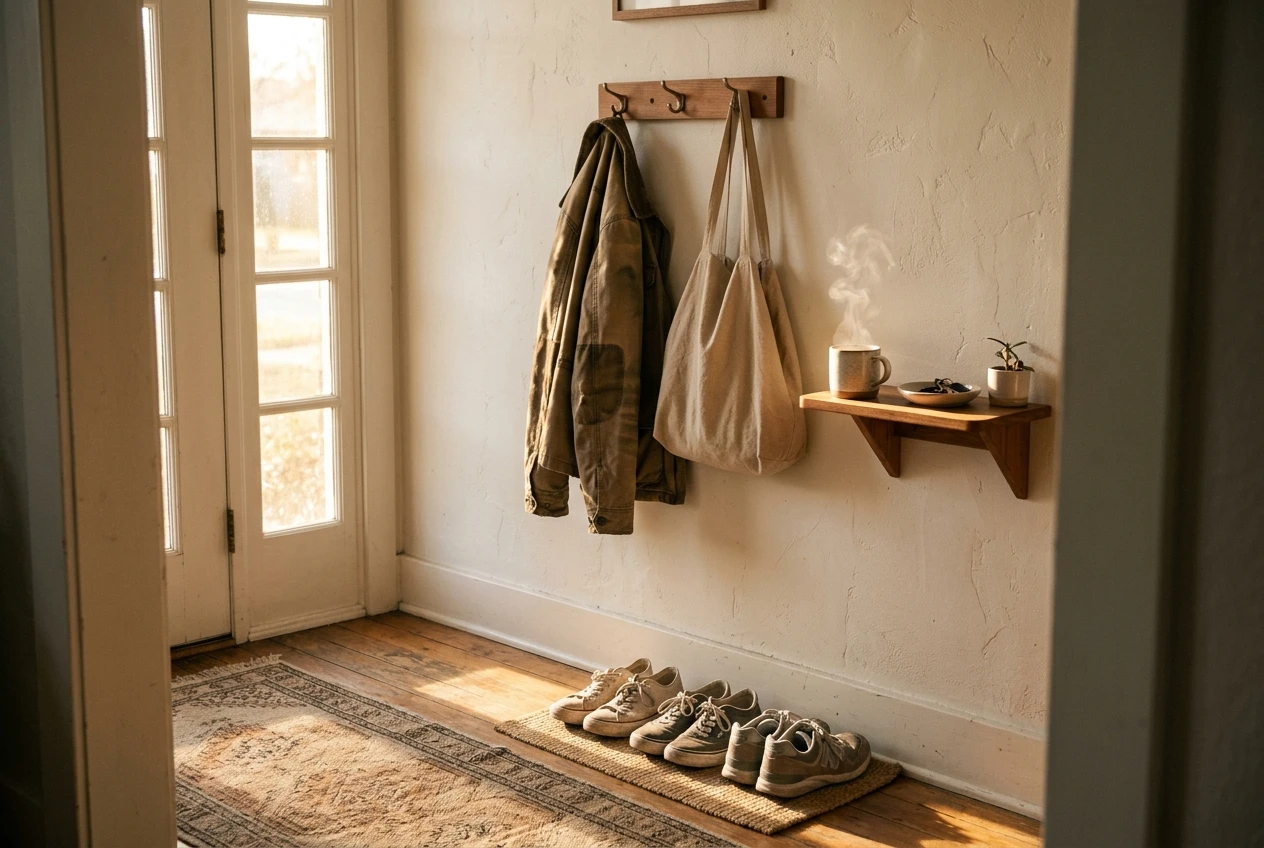
Put your walking shoes next to the door, or next to the place where your anchor happens. If you keep a jacket or a bag by the door, leave it there. A visible object works as a reminder, and it removes one small decision from the moment you would otherwise use to talk yourself out of it.
Plan for bad weather
Rain, heat, and cold are common reasons for skipping, so decide in advance what you will do. A five-minute walk works indoors: along a hallway, around the house, up and down a flight of stairs, or around the office floor. Write your bad-weather plan next to your anchor sentence, so that on a wet day you follow it instead of negotiating.
Where to find walking time in a packed schedule
If your calendar is full, five minutes can still be hard to find, but it is easier than finding thirty. The trick is to look for small gaps that already exist, rather than clearing a large block.

Some places to look:
- The start or end of the workday. If you work from home, a short walk before you open your laptop can stand in for the commute you no longer have. If you work in an office, a walk after you leave the building and before you get into the car or onto transit does the same job.
- The first five minutes of your lunch break. Walk first, then eat. Doing it before you sit down means the break is not used up by the time you decide to go.
- Phone calls that do not need a screen. If you take calls without needing to look at documents, walk while you talk. Many people find they listen better on their feet.
- Short errands done on foot. Walk to the further shop, the further coffee place, or the mailbox rather than the nearest option, when this is safe and practical.
- Movement built into transport. Park farther from the entrance, or leave public transport a stop early, only if the route is safe and the time cost is small.
- The post-dinner gap. The period after eating, before you settle on the sofa, is a convenient moment for many people and easy to attach to clearing the table.
Short walks also add up. Three separate five-minute walks give you fifteen minutes of walking, and you do not need to find a quarter-hour in one piece. This helps if your day is broken into small blocks between meetings and chores.
Next, look at where your time goes. Many people find that the time they believe they lack is partly spent on small gaps filled by a phone, such as waiting for a kettle, a lift, or a download. You do not need to give up all of that. Taking five minutes of it for a walk is often enough.
Finally, put the walk in your calendar the way you would a meeting. A recurring five-minute entry looks trivial, but it holds the slot and gives you a prompt.
What to do on the days you skip (and why one miss does not matter)
You will miss days. A sick child, a late deadline, a trip, or a plain bad mood will get in the way at some point. What matters is how you respond, because the common response is the worst one: deciding that the streak is broken, the plan has failed, and there is no point continuing.
One missed walk has almost no effect on your health or your fitness. Both change over weeks and months, not over single days. A habit works the same way. It forms through repetition over time, and one gap in that repetition does not erase it. The real risk is the reaction to the miss, not the miss itself.
The simple rule for misses
Try this: never skip twice in a row. If you miss today, the only job tomorrow is to do the five minutes. That keeps a single gap from growing into a week, and it gives you something clear to do instead of a vague promise to “get back on track.”
Shrink the walk instead of skipping it
On days when five minutes feels impossible, reduce it. Walk for one minute, or walk to the end of the street and back. This keeps the anchor in place and the routine alive on a day when the full version cannot happen. A one-minute walk looks pointless, but it keeps the connection between your anchor and your walk intact, and that connection is what you are building.
Treat a miss as information
If you skip the same day or the same time repeatedly, the cause is probably your plan, not your character. Ask what got in the way. Maybe your anchor happens at a time when you are always tired, or it depends on a meeting that regularly runs over. Pick a different anchor and try again. Adjusting the plan is a normal part of the process.
Go easy on streaks
A calendar where you mark each walk can be motivating, and it gives you a visible record. Be careful about turning it into a test you must not fail. If a streak breaks, start another one the next day. The record is useful because it shows overall consistency, not because any one day is sacred.
For illness, injury, or travel, it is reasonable to pause deliberately and restart afterward at five minutes. A planned break is different from drifting away, and starting again small is easier than trying to resume where you left off.
How to build up gradually and notice the difference
After two weeks of reliable five-minute walks, you can begin to extend them. The point of the first stage was to make the walk automatic. Now you can add time in small amounts, because the routine itself no longer takes effort.
A simple progression looks like this:
- Weeks 1 and 2: 5 minutes a day
- Weeks 3 and 4: 10 minutes a day
- Weeks 5 and 6: 15 minutes a day
- After that: 20 minutes or more, or a second short walk later in the day
Treat this as a guide, not a schedule you must meet. If a step up feels like too much, stay at the current length for another week or two. Nothing is lost by going slowly, and a plan you can keep beats a faster plan that stops.

Add time before you add effort
Lengthen the walk first, and only afterward think about walking faster or on hillier routes. Duration is easier to manage because you control it directly. When you do want to raise the intensity, a talk test is a useful guide: at a moderate pace you can hold a conversation but could not comfortably sing. If you cannot talk at all, slow down.
Add a second walk
Instead of making one walk longer, you can add a second five- or ten-minute walk tied to another anchor. For example, a morning walk after your coffee and an evening walk after dinner. This spreads the activity across the day and breaks up long stretches of sitting.
Notice what changes
Changes from walking are usually gradual, so they are easy to miss unless you look for them. Every week or two, take a minute to note a few things:
- How you feel in the half hour after a walk
- How alert you are during the afternoon
- How easily you fall asleep and how you feel when you wake up
- Whether the route you started on now feels easier
- How you handle stairs or longer stretches on foot in daily life
A single line in a notebook or a notes app is enough. Results differ between people, and some of these may not change much for you, so treat the notes as observations, not as a scorecard. Over several weeks they give you evidence that the effort is worth continuing, which is useful on days when motivation is low.
When to check with your doctor before you begin
For most healthy adults, an easy five-minute walk is a low-risk way to begin being active. Even so, it is sensible to talk to a doctor or other qualified health professional first if any of the following apply:
- You have been diagnosed with a heart condition, or have had chest pain or pressure
- You have high blood pressure, diabetes, asthma, or another long-term condition that is not well controlled
- You often feel dizzy or faint
- You have joint, bone, or back problems that make walking painful
- You are pregnant or have recently given birth
- You are recovering from surgery or an injury
- You take medication that affects your heart rate or blood pressure
- You have been inactive for a long time and are unsure what is safe for you
Your doctor knows your history and can tell you what pace and duration suit you. They may be happy for you to start exactly as described here, or they may suggest changes.
Whatever your health, stop walking and seek medical help if you experience chest pain, severe shortness of breath, or fainting. Mild effort and mild breathlessness are normal. Sharp pain or alarming symptoms are not. This article is general information and does not replace advice from a professional who knows you.
Start with tomorrow’s first five minutes
Choose your anchor now, while you are reading. Pick one daily event, such as your first coffee or the end of your workday, and write the sentence: After I [that event], I will walk for five minutes. Put your shoes where you will see them, set a timer on your phone, and decide your turn-around point.
Then do it tomorrow, and the day after. Hold the length at five minutes for two weeks before you add anything. That is the full plan for how to start a walking habit: a walk small enough to do on a bad day, a trigger already built into your routine, and time added only once the routine holds.